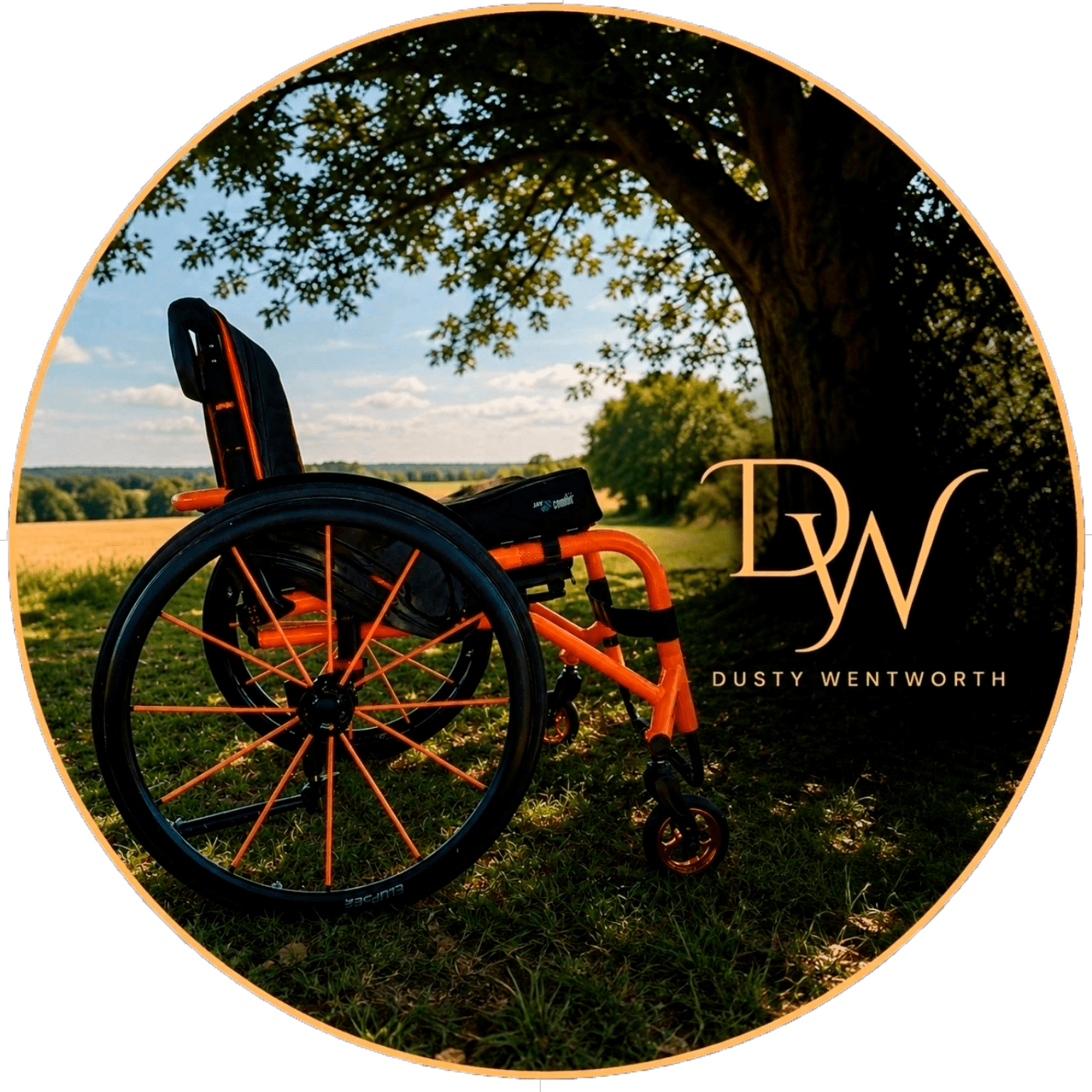
Why Disability Pride Month Isn't for Me

Posted on July 1st, 2026
July marks Disability Pride Month. For many disabled people, it is a time to celebrate identity, community and acceptance. I genuinely respect that. Everyone has the right to decide what disability means to them.
Personally, however, it is not something I identify with.
If I could wake up tomorrow free from Functional Neurological Disorder, Fibromyalgia, PTSD, the lasting effects of a ruptured brain aneurysm, and the limitations that made me a full-time wheelchair user, I would do so without hesitation. I do not feel pride in becoming disabled. I feel pride in adapting to it.
There is an important difference.
My disability has changed how I live my life, but it has never changed who I am. I am a husband, a father, a writer, a veteran and a friend. I happen to be disabled. It is part of my life, not the definition of my identity.
That is why Disability Pride Month has never resonated with me.
None of this is a criticism of those who find meaning in Disability Pride Month. It is simply an explanation of why it does not reflect my own view of disability.
Practical Solutions, Not Political Identities
I believe in equal rights for everyone. There are times when recognising specific groups is both necessary and entirely appropriate. Equality legislation exists because discrimination exists. Benefits such as Personal Independence Payment (PIP) require clear criteria to ensure support reaches those who need it. Accessibility standards exist because equal treatment sometimes requires reasonable adjustments.
Those are practical solutions to practical problems.
What I struggle with is the increasing tendency to build identities around our differences, rather than our common humanity.
Over the years, I have watched countless causes, campaigns, political movements and even religions evolve. Most begin with good intentions. They seek fairness, justice or recognition. Most people involved simply want to improve the lives of others.
Yet time and again, the loudest voices become the ones that dominate the conversation. Nuance disappears. Disagreement becomes suspicion. The focus shifts from bringing people together to deciding who belongs and who doesn't.
That concerns me far more than disability itself.
The Title of the Book
I do not want to belong to a separate community because of my disability. I want to belong to society.
I do not want people to see a wheelchair before they see a person.
I do not want my opinions to carry more weight because I am disabled, nor less weight for the same reason.
I simply want to be judged by my character.
Some people find strength through a shared disability identity. I understand that, and I respect their choice. My choice is different.
My greatest achievement has never been accepting a label. It has been refusing to let one define my future.
I have learnt to adapt. I have rebuilt my life around limitations I never asked for. I have found purpose through writing, photography and spending time with my family. None of those things exist because I am disabled. They exist because I chose not to let disability become the whole story.
That is where I find pride.
Not in disability itself, but in resilience.
Not in belonging to a category, but in remaining an individual.
The society I want to live in is not one where we continually divide ourselves into ever-smaller groups, each defined by its own identity, symbols and language. It is one where those differences matter less because everyone is treated with equal dignity and equal respect.
Disability should never prevent someone from participating fully in society. We should remove barriers, improve accessibility and challenge discrimination wherever it exists. But none of that requires disability to become a political identity.
For me, equality has never been about creating separate spaces or separate identities. It has always been about removing the need for them.
Perhaps one day we will reach a point where disability is simply another part of human diversity, recognised when necessary, but never allowed to define the person.
That, to me, feels like real progress.
So, while others celebrate Disability Pride Month, I will quietly step aside.
Not because I am ashamed of being disabled.
Not because I oppose equality.
But because I believe my disability is only one chapter of my life, not the title of the book.
I am not defined by disability.
I am simply a person who happens to be disabled.
For me, that is enough.
Contact Me
Reach Out Now
I'm here to explore the depths of modern masculinity, resilience, and family dynamics. Reach out through the form and let's delve into these narratives together.